
A realistic guide to office design and choosing furniture that supports your wellbeing
Burnout doesn’t always start with workload. Sometimes, it starts with the chair you’re sitting on, the noise around you, and the space you’re expected to perform in every day. Here’s how thoughtful office design and the right furniture choices can shift your team from stress to support – without needing a full refurb. 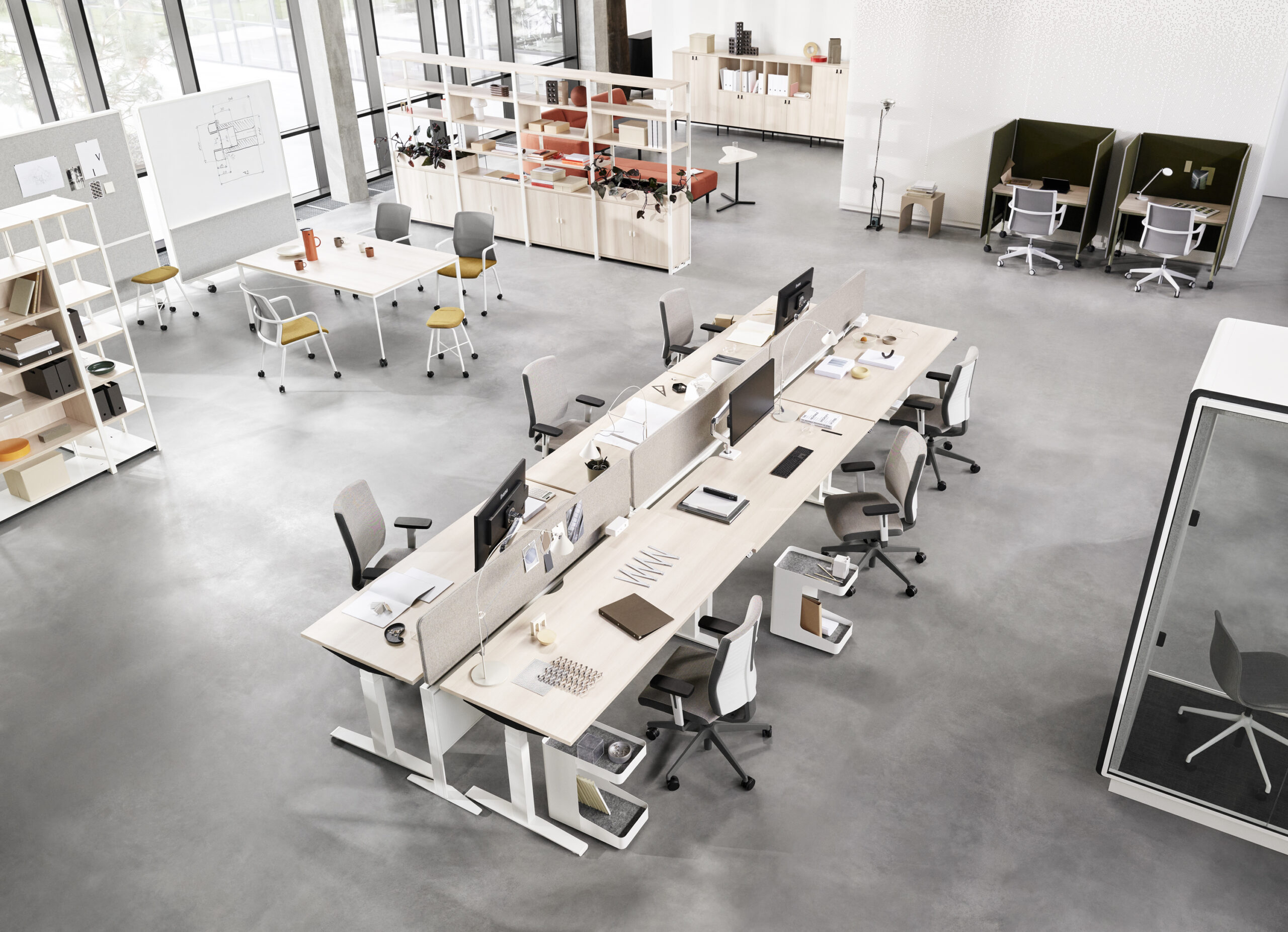
Burnout is often treated like a personal issue – something we fix with better habits. Drink more water. Take breaks. Be more organised. And while those things matter, there’s one huge factor that’s often overlooked: the environment we work in.
The chair that becomes uncomfortable by mid-morning. The desk that encourages poor posture. The constant noise, foot traffic, and lack of quiet corners. The meeting rooms that feel cramped, harsh, or airless. These small pressures don’t feel dramatic in the moment, but together they create a daily build-up of stress.
The good news is that balance doesn’t need to mean a complete redesign. Often, it comes down to practical upgrades in furniture, layout and flexibility—the things that make work feel easier without people even realising why.
Comfort isn’t a luxury – it’s the foundation
Physical discomfort quickly becomes mental fatigue. Furniture should support people throughout the day, not force them to adapt.
Focus on:
- ergonomic chairs with lumbar support
- height-adjustable desks to encourage movement
- monitor arms for neck and shoulder comfort
- cable baskets and tidy storage to reduce clutter
“Your chair and desk should support you – not silently wear you down.”
Focus is a design feature
High-density desk plans can look efficient but often reduce performance. Constant distractions make it harder to concentrate and increase stress levels.
Simple fixes include:
- acoustic desk screens
- clear walkways (avoid desks becoming corridors)
- quiet zones away from collaboration areas
- high-back seating for semi-private focus
Balance starts with choice
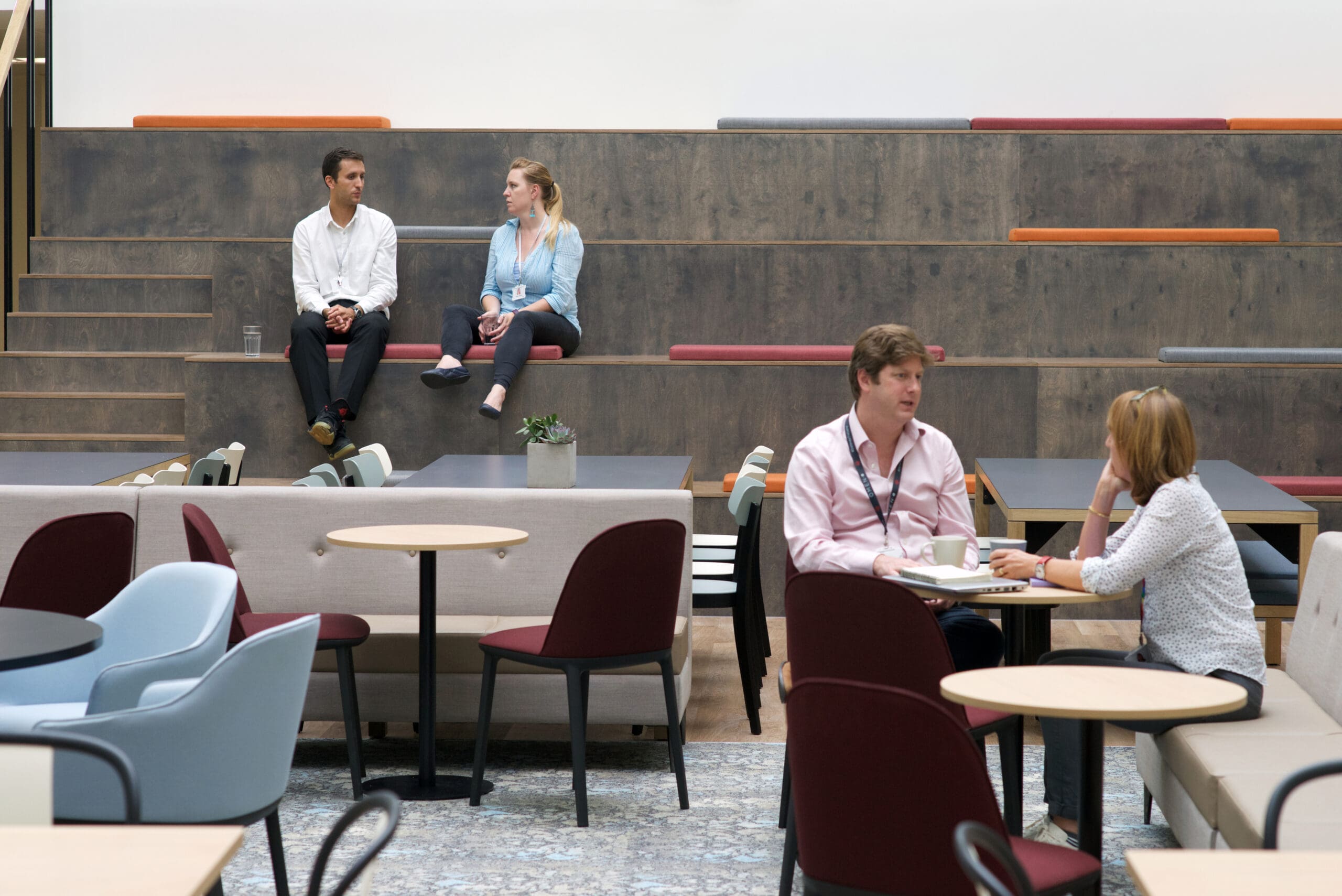
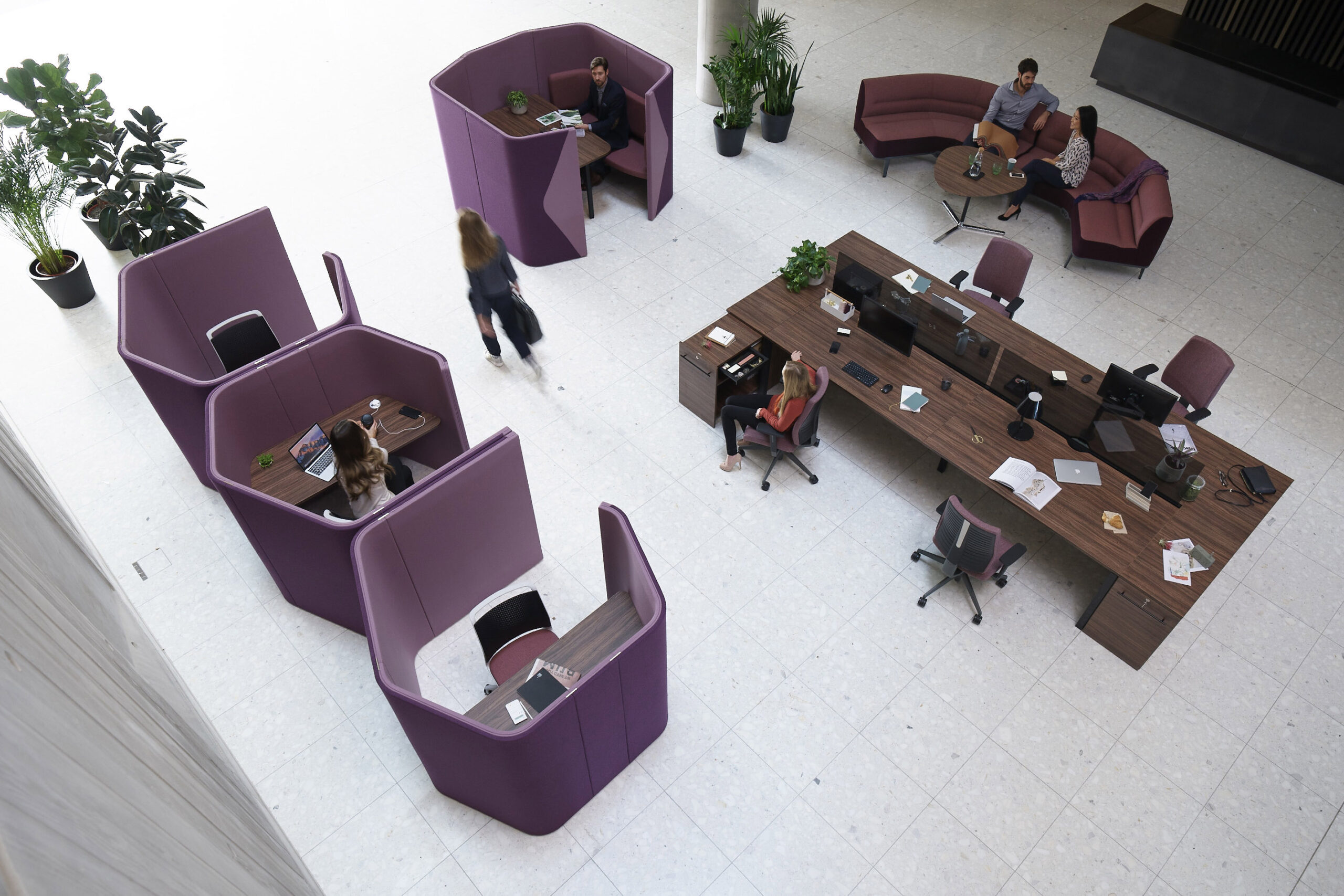
The modern workday is a mix: calls, collaboration, admin, deep focus. A balanced office supports different work modes by offering a variety of settings.
Include:
- workstations for focus
- breakout seating for informal chats
- booths/pods for calls
- calm reset corners
“A well-designed space doesn’t just look good – it feels easier to work in.”
Meeting rooms shouldn’t drain your day
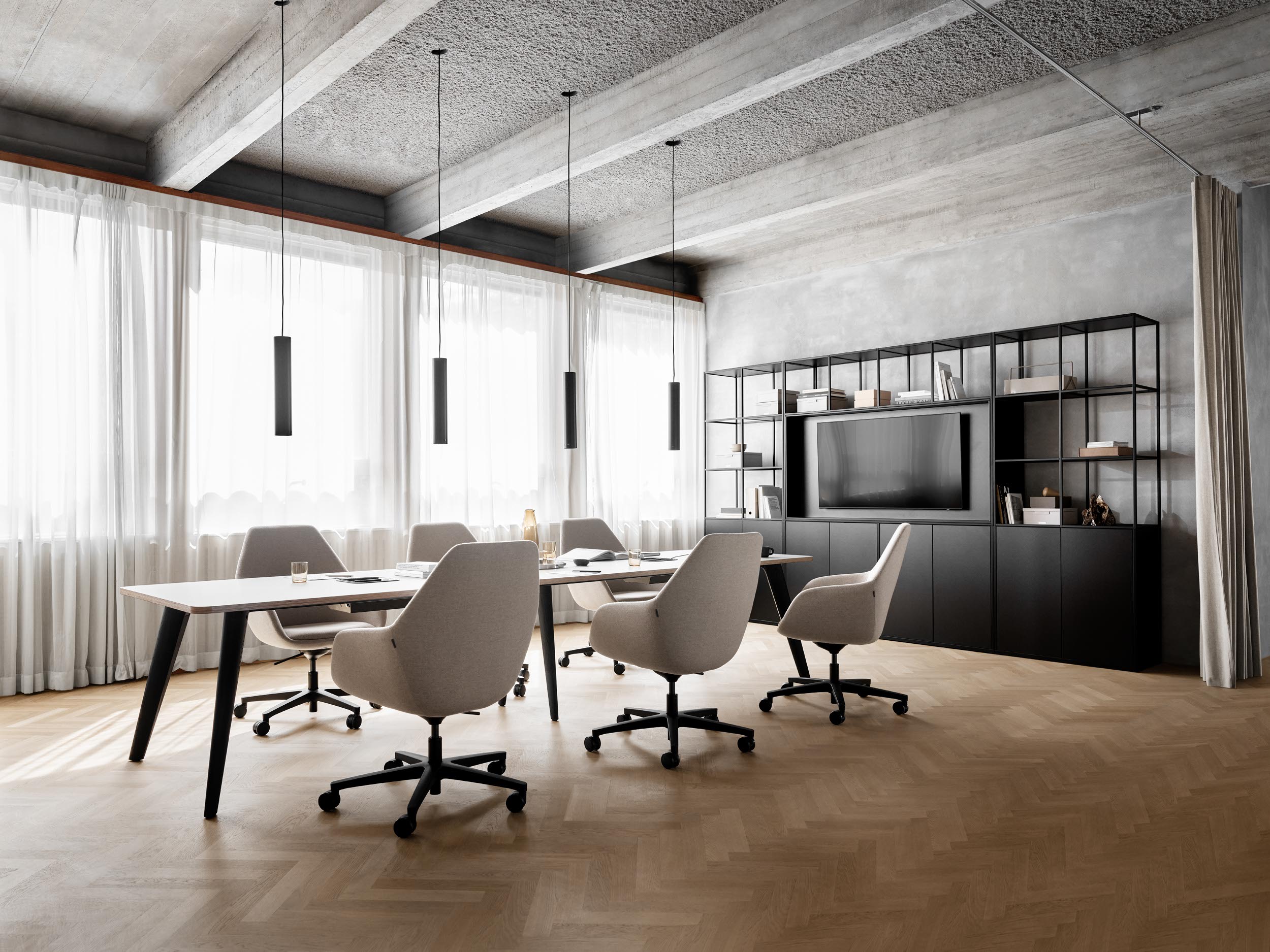
Meeting spaces can be hidden stress multipliers. Improving comfort and acoustics makes meetings feel shorter, calmer, and more productive.
Quick wins:
- supportive meeting chairs
- tables sized correctly so no one feels squeezed
- standing-height tables for quick catch-ups
THE TAKEAWAY
Burnout isn’t always personal. Sometimes it’s environmental.
When a workspace is uncomfortable, noisy, cluttered or inflexible, it adds stress. But when it supports comfort, focus and choice, people don’t just show up… they thrive.